AR
AR  EN
EN  FR
FR  ES
ES  JA
JA  KO
KO  PT
PT  ZH
ZH  FA
FA  RU
RU  NL
NL  MS
MS  VI
VI  PH
PH  TH
TH  ID
ID 

USD – Hawkish Fed could provide support for the USD
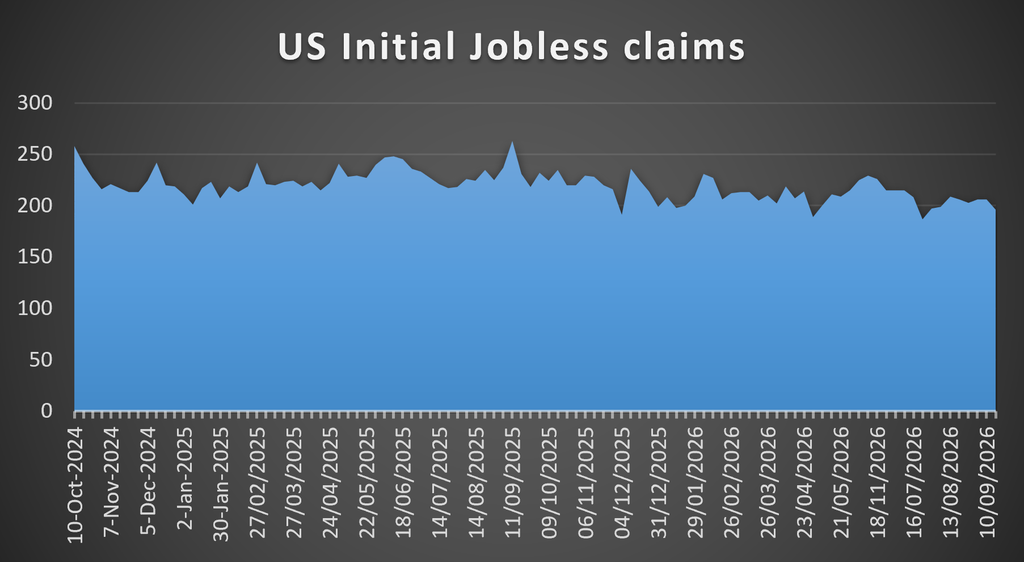
With the Fed’s interest rate decision out the calendar for USD traders becomes lighter in the coming week, as not major financial releases are scheduled, maybe with few exceptions. Overall though, we expect fundamentals to lead the greenback in the coming week.
On a monetary level the Fed proceeded with its first rate hike since 2023, as was widely expected. It should be noted that the bank hiked rates against US President Trump’s wishes. It’s characteristic that Fed Chair Warsh stated that ‘Inflation is too high and has been for too long’, signalling his hawkish intentions. Overall Fed Chair Warsh seems to be ready to differentiate the bank’s monetary policy from Trump’s wishes.
The bank’s new dot plot indicated that Fed policymakers currently expect another rate hike until the end of the year. The decision renewed support for the USD in the FX market, also weighing on US equities and gold’s price. Should we see Fed policymakers reiterating the bank’s hawkish intentions we may see the USD getting additional; support in the coming week.
On a deeper fundamental level, we note the Trump-Xi meeting next Thursday in Washington. Despite not expecting agreements being announced we expect clues regarding geopolitics and international trading conditions to emerge that could affect the markets.
GBP – BoE remained on hold as was expected
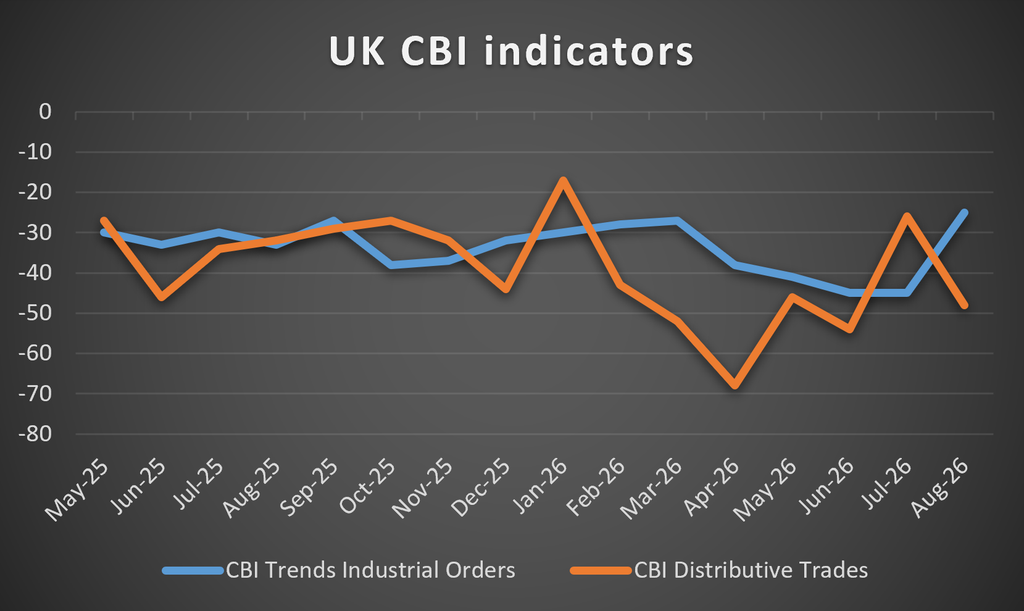
On a macro economic level, we note that inflationary pressures in the UK economy seem to have intensified in August. The release tended to add more pressure on BoE to tighten its monetary policy. Yet BoE remained on hold as was expected, and may have sounded less hawkish than expected, keeping the vote count unchanged, implying that there was no shift in the balance of power within the bank.
Nevertheless, the market expects a rate hike in the bank’s next meeting near the end of October. Should the market’s hawkish expectations intensify over the coming week, we may see the pound getting some support.
On a fiscal level, UK bond yields have risen which raised some eye brows, as the spectre of higher servicing costs for the UK national debt emerged, providing a reality check for the UK government mid week. Also we note that UK PM Burnham vowed to “deepen relationships” with the EU, which could be somewhat supportive for the EU.
JPY – BoJ hiked rates yet was unconvincing for its hawkish intentions
JPY lost ground across the board, making it the weakest link for the week. On a monetary policy BoJ’s interest rate decision on Friday also contributed to JPY’s weakness. JPY weakened across the board yesterday, despite BoJ hiking rates as expected.
The bank raised rates, yet the vote count revealed that two BoJ policymakers dissented and favouring keeping rates unchanged. The vote count tended to raise doubts about future rate hikes, as it underscored the bank’s difficulty in continuing to raise rates. The market had to reposition itself, selling JPY, as its hawkish expectations eased. Nevertheless, we still view the bank as maintaining a tightening bias.
BoJ Governor Ueda in his press conference hit a more hawkish tone underscoring the bank’s commitment to price control at the bank’s 2% target. Should such doubts intensify, we may see JPY short sellers, renewing carry trade, which in turn could weigh on JPY.
On fiscal level, UK PM Takaichi’s government seems to have strong intentions to take measures supporting growth for the Japanese economy, a scenario that could theoretically provide support for the JPY. Yet given the enormous Japanese national debt, an expansionary fiscal policy could imply increased borrowing, which in turn may weigh on the JPY. Overall we see the case for fundamentals to lead the JPY traders give the low number of high impact financial releases.
EUR – Euro Zone’s preliminary September PMI figures in focus
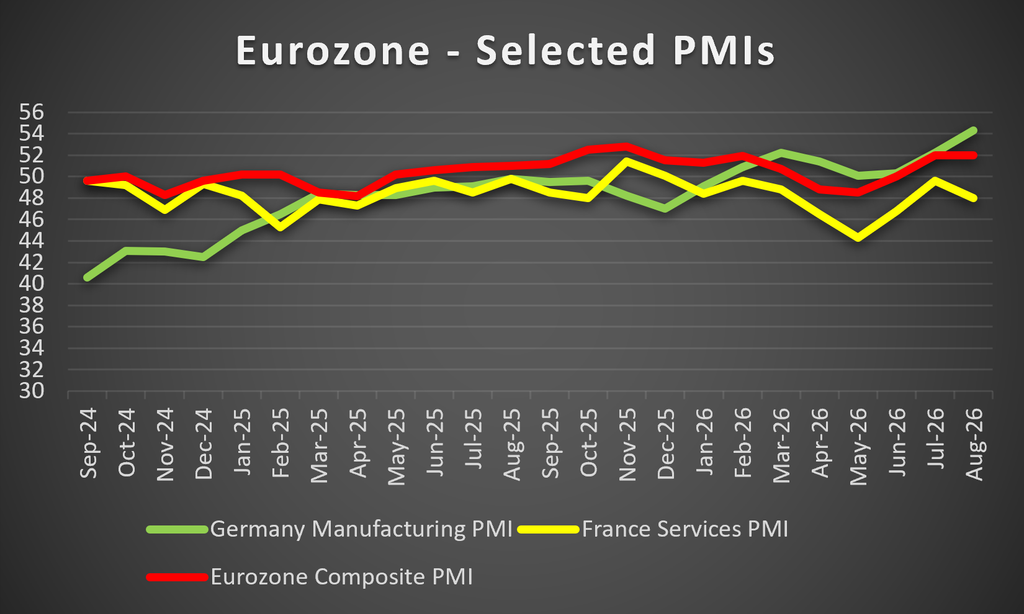
On a macro level we note that Euro Zone’s inflationary pressures for August accelerated beyond market expectations which may have been supportive for the common currency.
EUR traders in the coming week, keep a close on the release of the Germany’s, France’s and the Euro Zone’s preliminary PMI figures for September. A rise of the indicator’s readings, possibly beyond market expectations, we may see the common currency getting some support as the release would imply a faster than expected expansion of economic activity in the Zone ion a time where besides inflation growth is the next big issue.
On a fundamental level, we maintain our worries for the political situation in Germany and the elections in the state of Berlin and Mecklenburg Vorpommern may prove to be crucial for German Chancellor Mertz. Another possible wide defeat of his part the Christian Democrats, could prompt them to switch Mertz with someone else and alter their government policies especially regarding immigration.
AUD – August’s employment data due out
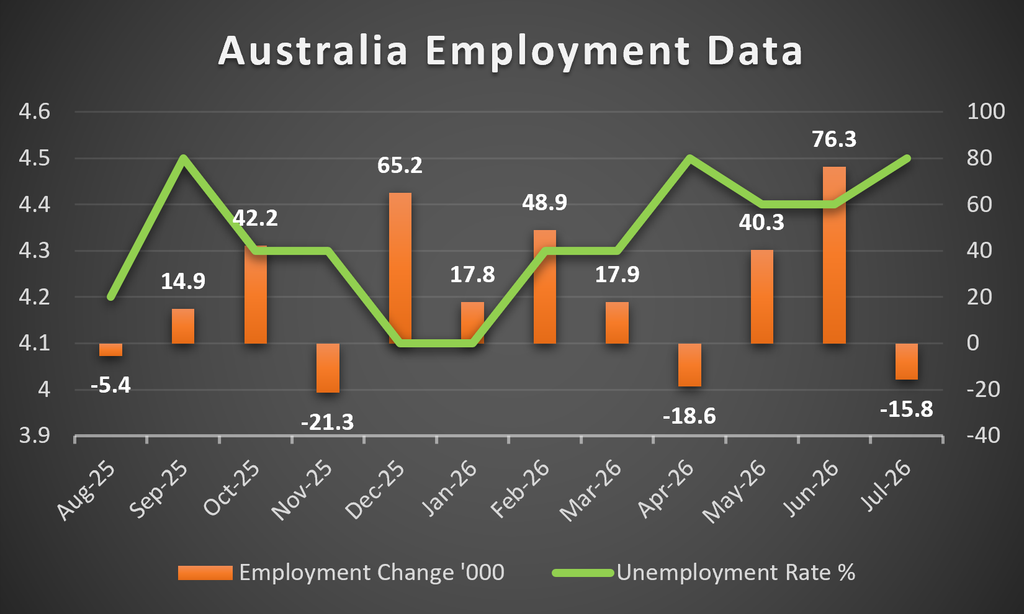
AUD is about to end the week in the reds against the USD for a second week in a row. In the coming week, we highlight for Aussie traders, the release of Australia’s employment data for August.
A possibly tighter than expected Australian employment market could provide some support for the Aussie as it would allow RBA to toughen its monetary policy stance even further. It should be noted that RBA’s Governor Bullock stated in today’s Asian session, that the central bank’s concerns regarding stubborn inflation are materializing, sending out hawkish signals towards the markets.
Overall a possibly more hawkish stance of RBA, could provide some support for the Aussie. Please note that the markets are currently almost fully pricing in the possibility that the bank will hike rates in the September (29th) meeting.
On a more fundamental level, a possible improvement of the US-Australian trade relationships, given the Trump-Xi meeting, could provide some support for AUD as Australia has high exports towards China. Also a possible improvement of the market sentiment could support the Aussie as it is considered as a riskier asset in the FX market, given its commodity currency nature.
CAD – Canada’s July retail sales to be released
The Loonie continued to weaken against the USD for a second week in a row. On a fundamental level, the tensions in the US-Canadian trade relationships are ongoing and weighing on the Loonie. Canada is trying to redirect its trading, looking for alternative markets.
Canada’s PM Carney in a charm offensive travelled in Europe. Despite his idea for a “middle power” seemingly getting a cold shoulder, the Europeans seem ready for a closer cooperation in trading, given that a full membership of Canada in the EU cannot be achieved. Despite PM Carney’s efforts could provide some success it remain doubtfull that the can substitute for the volume of USCanadian trade. Hence further tensions in the US-Canadian trade relationships could weigh on the Loonie.
On a macroeconomic level, we note that Canada’s CPI rates remained unchanged, within BoC’s inflation target zone of 2±1%yy, yet the release tends to add some pressure on BoC to tighten its monetary policy.
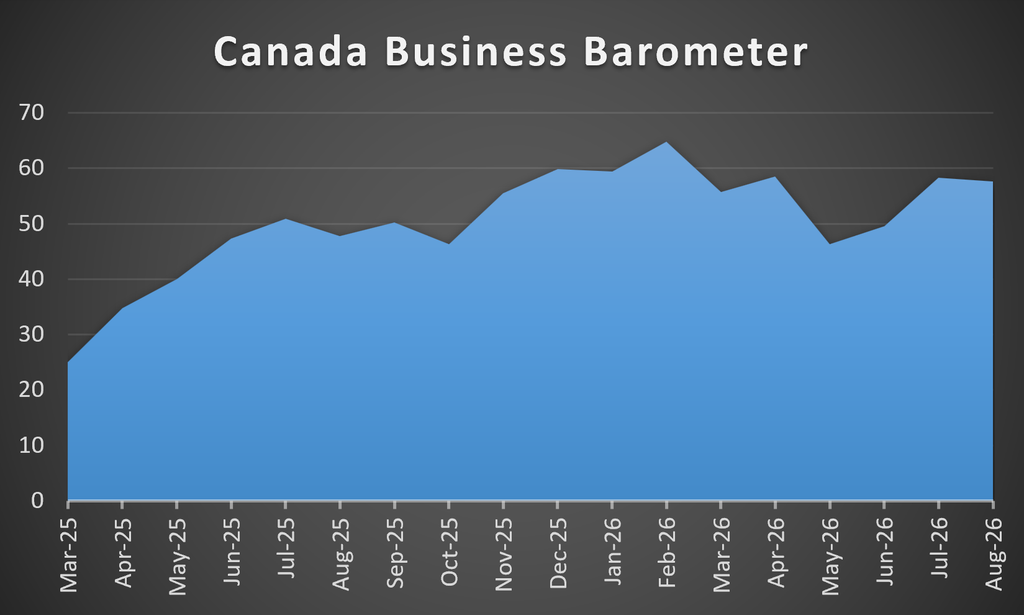
In the coming week, we highlight the release of Canada’s retail sales for July on Thursday, and a possible acceleration of the rate could imply a strengthening demand side in the Canadian economy. Also a higher reading of Canada’s business barometer for September could provide some support for the Loonie.